METALLICA UNCHAINED:
Four Young Titans, One Loud Future — The Raw, Reckless Brotherhood That Redefined Heavy Metal
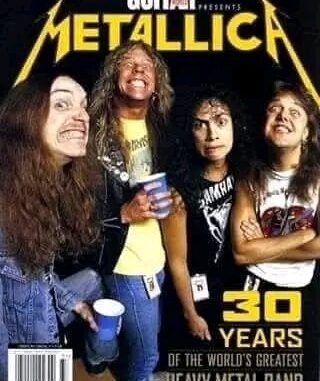
In the grainy glow of backstage lights and beer-soaked laughter, Metallica didn’t look like the most important heavy metal band in the world. They looked like four reckless kids barely holding it together — grinning too wide, eyes burning with ambition, chaos stitched into their denim and leather. And yet, within that raw energy lived a force that would go on to reshape heavy metal forever.
This was Metallica unchained — before the stadiums, before the Grammys, before history bowed to their name.
Formed in 1981 in Los Angeles by Danish-born drummer Lars Ulrich and street-hardened riff architect James Hetfield, Metallica emerged from the underground at a time when metal itself was splintering. Glam ruled the Sunset Strip. Punk snarled in the shadows. Traditional metal still clung to its roots. Metallica did not choose a lane — they bulldozed all of them.
When guitarist Kirk Hammett joined, bringing speed, theory, and a hunger forged in Exodus, the band’s sound sharpened like a blade. And when Cliff Burton arrived — a bassist who played like a lead guitarist and thought like a philosopher — Metallica became something else entirely. Not just a band. A brotherhood.
They were loud, unpolished, and dangerous. Songs stretched longer, faster, and darker than radio would tolerate. Riffs galloped. Drums attacked. Lyrics confronted death, war, addiction, control, and inner collapse. This was not music designed for comfort. It was music forged for survival.
Metallica’s early years were fueled by obsession. They practiced relentlessly, toured mercilessly, and demanded absolute commitment. Friendship and friction existed in equal measure. Arguments were brutal. Loyalties were tested. But out of that tension came truth — and truth became sound.
Albums like Kill ’Em All and Ride the Lightning weren’t just records; they were declarations of war. They announced that heavy metal could be intelligent without losing ferocity, melodic without becoming weak, and aggressive without being shallow. By the time Master of Puppets arrived, Metallica had already transcended their peers. The album didn’t chase trends — it crushed them.
Yet the image of Metallica as untouchable gods ignores what made them powerful in the first place: they were human. Messy. Flawed. Driven by insecurity as much as confidence. They drank too much. They fought too hard. They pushed themselves and each other to the edge — sometimes past it.
The tragic death of Cliff Burton in 1986 shattered the band and threatened to end it entirely. But instead of collapsing, Metallica rebuilt themselves in grief. That resilience became part of their DNA. Every chapter that followed — the evolution, the backlash, the reinvention — traced back to those early days when four young men believed music could be louder, heavier, and more honest than anyone allowed.
Metallica’s greatest achievement isn’t just their sales numbers or longevity. It’s the way they changed the rules. They proved that underground metal could conquer the mainstream without surrendering its soul. They opened doors for countless bands while refusing to walk quietly through any of them.
Looking back at images from that era — wild eyes, crooked smiles, beer cups clutched like trophies — you don’t see legends yet. You see hunger. You see defiance. You see four young titans standing at the edge of something massive, unaware of how far their noise would travel.
Metallica unchained wasn’t polished. It wasn’t safe. It wasn’t meant to last forever.
And that’s exactly why it did.
Because heavy metal doesn’t belong to the perfect — it belongs to the fearless. And in those early years, no one was more fearless than Metallica.
Leave a Reply