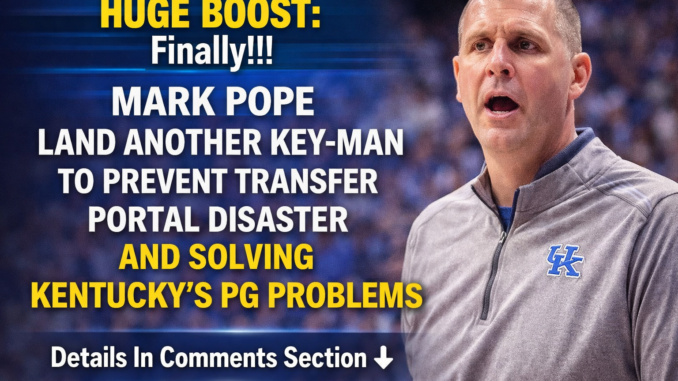
The move had been expected for some time, but Mark Pope has now officially brought in a key figure to address Kentucky Wildcats men’s basketball’s roster-building issues.
Keegan Brown has been named the program’s Associate Director of Player Development, according to KSR. However, his role goes far beyond traditional on-court development duties like drills or practice support.
Brown operates more as a behind-the-scenes strategist than a hands-on coach. His hiring reflects Kentucky’s need for a data-driven, analytical mind to support decision-making at the highest level.
A front-office-style role
Unlike typical player development coaches who focus on skill work and daily player interaction, Brown’s position is more aligned with a front-office analyst. He will provide the coaching staff with detailed insights using data modeling, advanced film study, and performance analytics.
As Pope has emphasized, the program needed someone who could constantly analyze and simulate roster decisions. Brown’s responsibilities will include:
- Advanced analytics and modeling: Running detailed projections, NIL and roster value scenarios, and performance forecasts to guide decisions in the transfer portal era.
- Prospect evaluation: Assessing recruits, transfers, and international players based on how their metrics fit into the team’s system—not just raw talent.
- Roster management: Assisting with lineup construction, depth planning, and ensuring balance across positions.
Leveraging G League experience
Brown previously worked with Pope at BYU before joining the Wisconsin Herd, the G League affiliate of the Milwaukee Bucks, as a video coordinator. That experience adds another layer to his value.
In that role, he specialized in breaking down game film into precise, actionable feedback. Rather than relying on general coaching cues, Brown’s approach uses evidence-based analysis to pinpoint weaknesses and recommend specific improvements—helping players develop more efficiently.

Fixing roster construction issues
Kentucky’s 22–14 season exposed major flaws in roster construction, including positional overlap and lack of depth at key spots like point guard. Injuries only amplified those problems, leading to a breakdown in team performance.
Brown’s background in analytics-driven roster building—particularly his work with Pope at BYU—positions him as a solution to those issues. His role will be to ensure future rosters are better balanced, strategically assembled, and adaptable.
By adding a dedicated analytics specialist, Pope is taking a calculated step toward preventing another costly roster misfire and building a more cohesive, competitive team moving forward.
Mark Pope has an obvious 1st transfer portal target to solve Kentucky’s PG problems
Even though the college basketball transfer portal does not officially open until April 7, speculation and behind-the-scenes discussions are already dominating headlines. As Mark Pope and his reshaped front office begin rebuilding the Kentucky Wildcats men’s basketball roster, one name stands out as a top priority: Jackson Shelstad.
Kentucky’s point guard struggles exposed
Kentucky’s 22–14 season revealed a major weakness at point guard. When starter Jaland Lowe was sidelined with an injury, the offense unraveled. The coaching staff had not secured a reliable backup, forcing inexperienced players like Collin Chandler and Jasper Johnson into primary ball-handling duties before they were ready.
Denzel Aberdeen stepped in and did what he could, but as a natural off-ball guard, he struggled to fill the role. His team-leading 3.4 assists per game underscored just how stagnant Kentucky’s offense had become—the lowest assist-leading average in a standard season for the program in over a decade.
Why Shelstad fits perfectly
Shelstad, a standout guard from Oregon Ducks men’s basketball, brings the exact skill set Kentucky lacked: shot creation and playmaking under pressure. In his injury-shortened 2025–26 campaign, he averaged 15.6 points and 4.9 assists across 12 games while logging heavy minutes, proving he can operate as a high-level primary creator.
Pope has openly acknowledged his team’s need for players who can generate offense both for themselves and for teammates, and Shelstad checks both boxes.
Injury concerns—and a potential upside
Shelstad’s recent hand injury, which sidelined him for the final three months of the season, is the main question mark. However, he is expected to be fully cleared in time for offseason workouts, giving him ample opportunity to build chemistry with a new team.
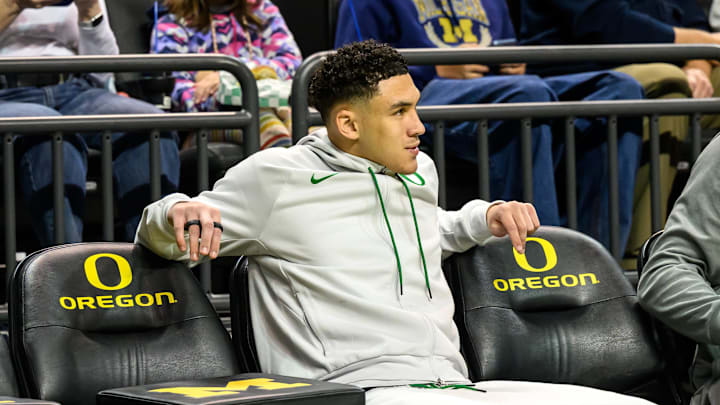
There could also be a major eligibility benefit. Because he played only 12 games, Shelstad has pursued a medical redshirt. If approved by the National Collegiate Athletic Association, he would gain an extra year of eligibility—potentially offering two full seasons instead of one.
A move that could stabilize Kentucky’s backcourt
Landing a proven, multi-year point guard like Shelstad would immediately address Kentucky’s biggest weakness and provide stability at the most important position on the floor. It would also serve as a strong early statement from Pope as he works to reshape the roster and respond to critics questioning his recruiting approach in the transfer portal era.
Leave a Reply