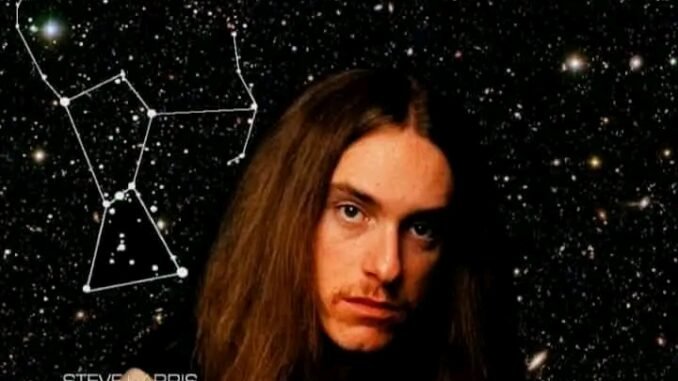
A Star Never Dies — Metallica’s “Orion” and the Birth of Metal Immortality
In the vast universe of heavy metal, few compositions feel as timeless, as untouchable, and as spiritually loaded as Metallica’s instrumental masterpiece, “Orion.” Released in 1986 on Master of Puppets, the track stands apart—not because it shouts louder or moves faster, but because it speaks without words. “Orion” is not merely a song; it is a celestial monument, a requiem, a celebration, and ultimately, the moment heavy metal proved it could achieve true immortality.
At a time when thrash metal was defined by speed, aggression, and lyrical rebellion, Metallica dared to go inward. No vocals. No chorus. No obvious hooks. Instead, “Orion” unfolded like a cosmic journey—layered, patient, and deeply emotional. It was a bold move, especially for a band riding the violent momentum of tracks like “Battery” and “Damage, Inc.” But Metallica had always been more than volume and velocity. With “Orion,” they reached for the stars.
The heart of “Orion” belongs to Cliff Burton. His presence permeates every second of the track, not as a bassist confined to the shadows, but as a composer and visionary shaping the song’s soul. Burton didn’t just play bass—he expanded its role, bending it into something melodic, expressive, almost orchestral. The iconic bass intro, often mistaken for a guitar, is Cliff speaking directly to the listener, pulling them into orbit.
Burton’s classical influences—Bach, Beethoven, and beyond—are embedded in the track’s structure. “Orion” ebbs and flows like a symphony, moving through movements rather than verses. Each section feels purposeful: the ominous opening, the galloping midsection, the ethereal harmony break, and the triumphant return. It is metal composition elevated to an art form, proof that heaviness and beauty are not opposites, but twins.
The title itself is no accident. Orion, the hunter constellation, has guided travelers for thousands of years. It represents strength, myth, and eternity—qualities that mirror both the song and Burton himself. After Cliff’s tragic death later in 1986, “Orion” transformed from a brilliant instrumental into something far more profound: a sonic tombstone etched across the night sky.
When Metallica perform “Orion” live, the atmosphere changes. The pit calms. Fists lower. Eyes close. Fans don’t rage—they listen. The harmony section, often called one of the most beautiful moments in metal history, feels like suspension in zero gravity. It is reflective, mournful, yet hopeful. In those moments, Cliff Burton feels present, his spirit woven into the frequencies vibrating through the crowd.
Unlike many instrumentals that serve as technical showcases, “Orion” never feels indulgent. Its complexity exists in service of emotion, not ego. Each riff builds on the last, each transition feels earned. There is discipline in its construction, restraint in its power. Metallica weren’t showing off—they were telling a story without language, allowing the listener to project their own meaning onto the stars.
“Orion” also marked a turning point for heavy metal itself. It challenged the genre’s boundaries and expectations, proving that metal could be introspective, cinematic, and deeply human. It opened doors for countless bands to explore instrumentals not as fillers, but as centerpieces. In this sense, “Orion” didn’t just define Metallica—it reshaped metal’s future.
Decades later, its influence remains undeniable. Musicians still dissect its harmonies. Fans still debate its finest moments. New generations discover it not as an old track, but as a living artifact—unchanged by time. In an era of algorithm-driven music and shrinking attention spans, “Orion” demands patience, and rewards it with transcendence.
Cliff Burton once said that music should take people somewhere else. With “Orion,” he succeeded beyond measure. The song doesn’t age because it exists outside of time. It doesn’t belong to 1986—it belongs to the cosmos. Every note feels carved from starlight, every silence intentional.
In the end, “Orion” is proof that true art never fades. Musicians may fall, eras may end, but what is created with honesty and vision becomes eternal. Metallica captured that truth in eight minutes of instrumental brilliance, and in doing so, gave heavy metal one of its purest, most immortal stars.
A star never dies.
It simply burns forever—guiding those who still dare to look up.
Leave a Reply